

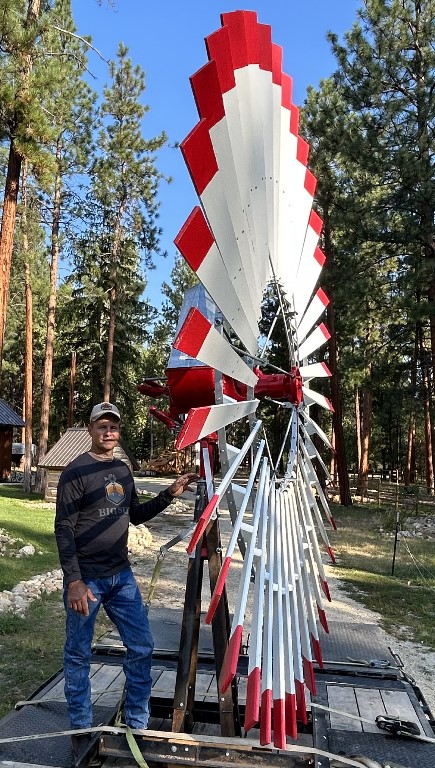
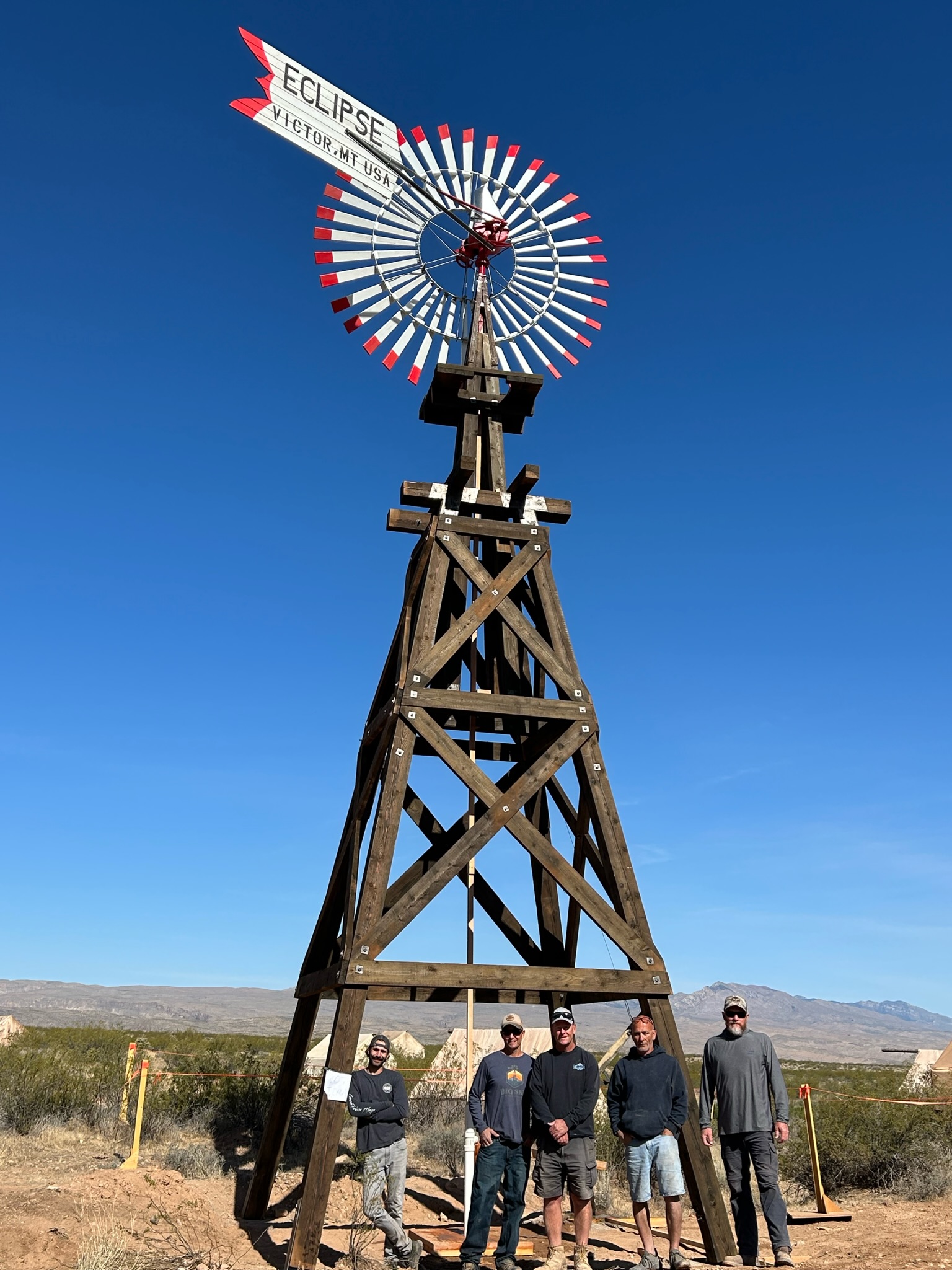
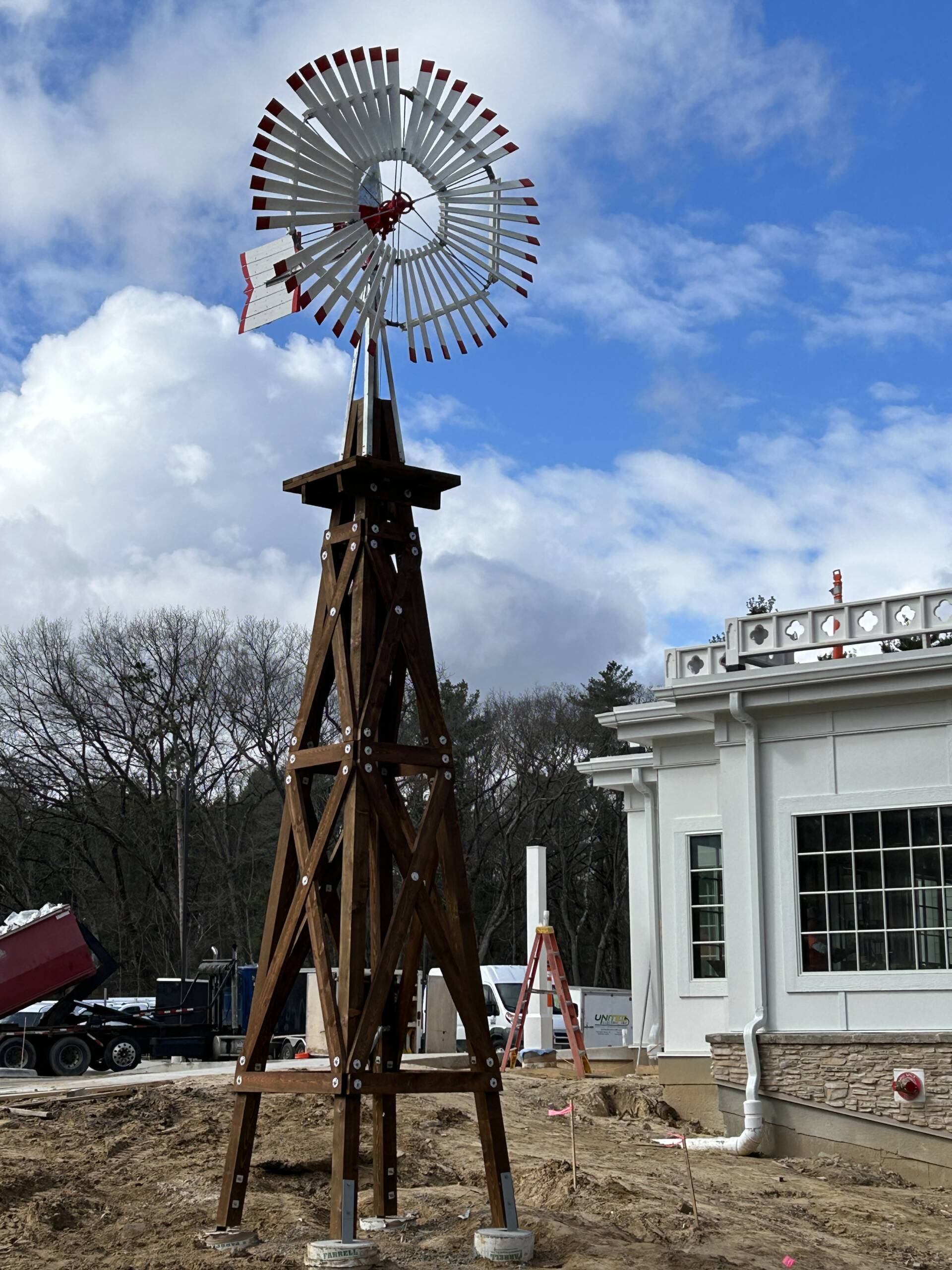
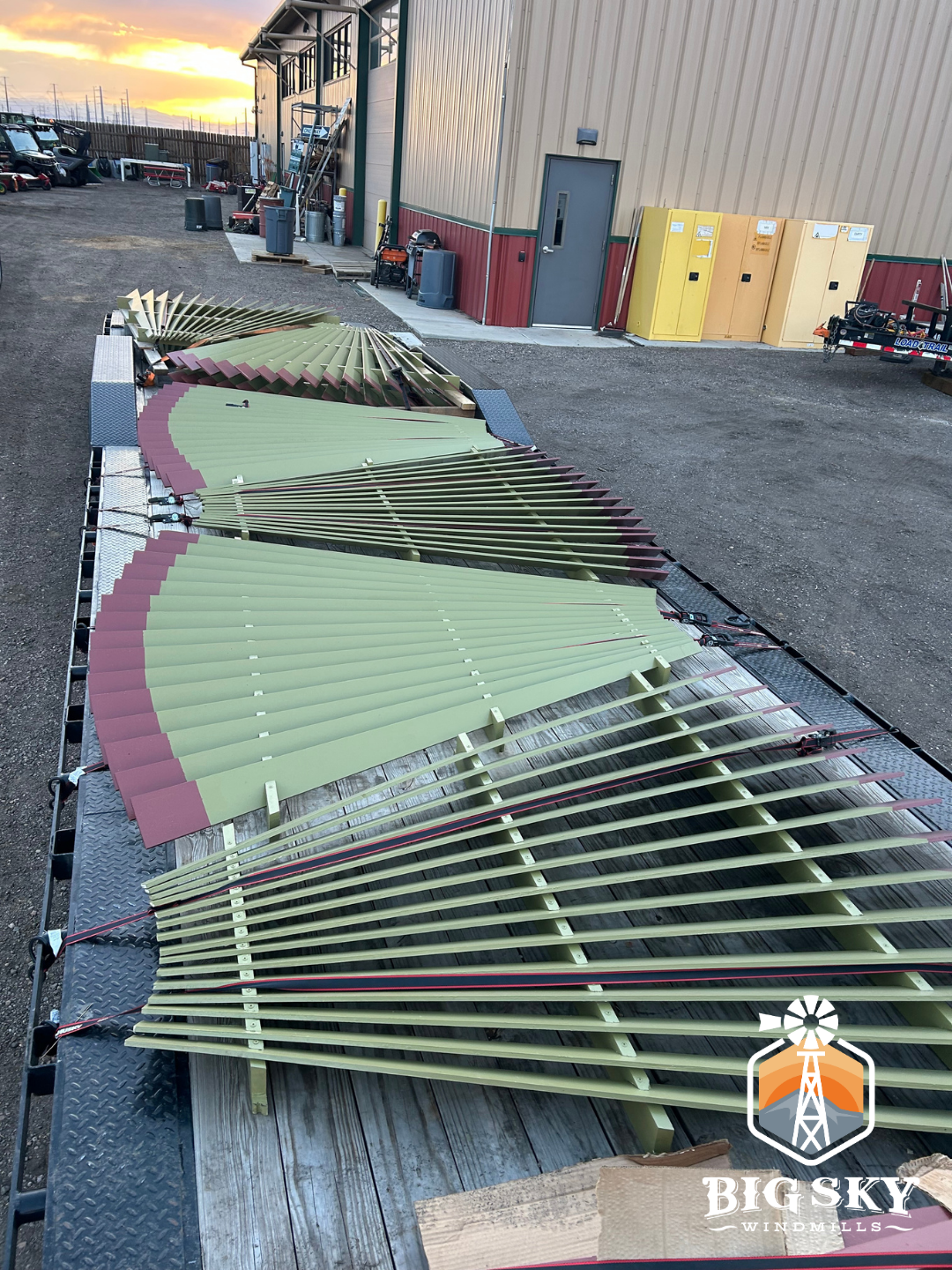
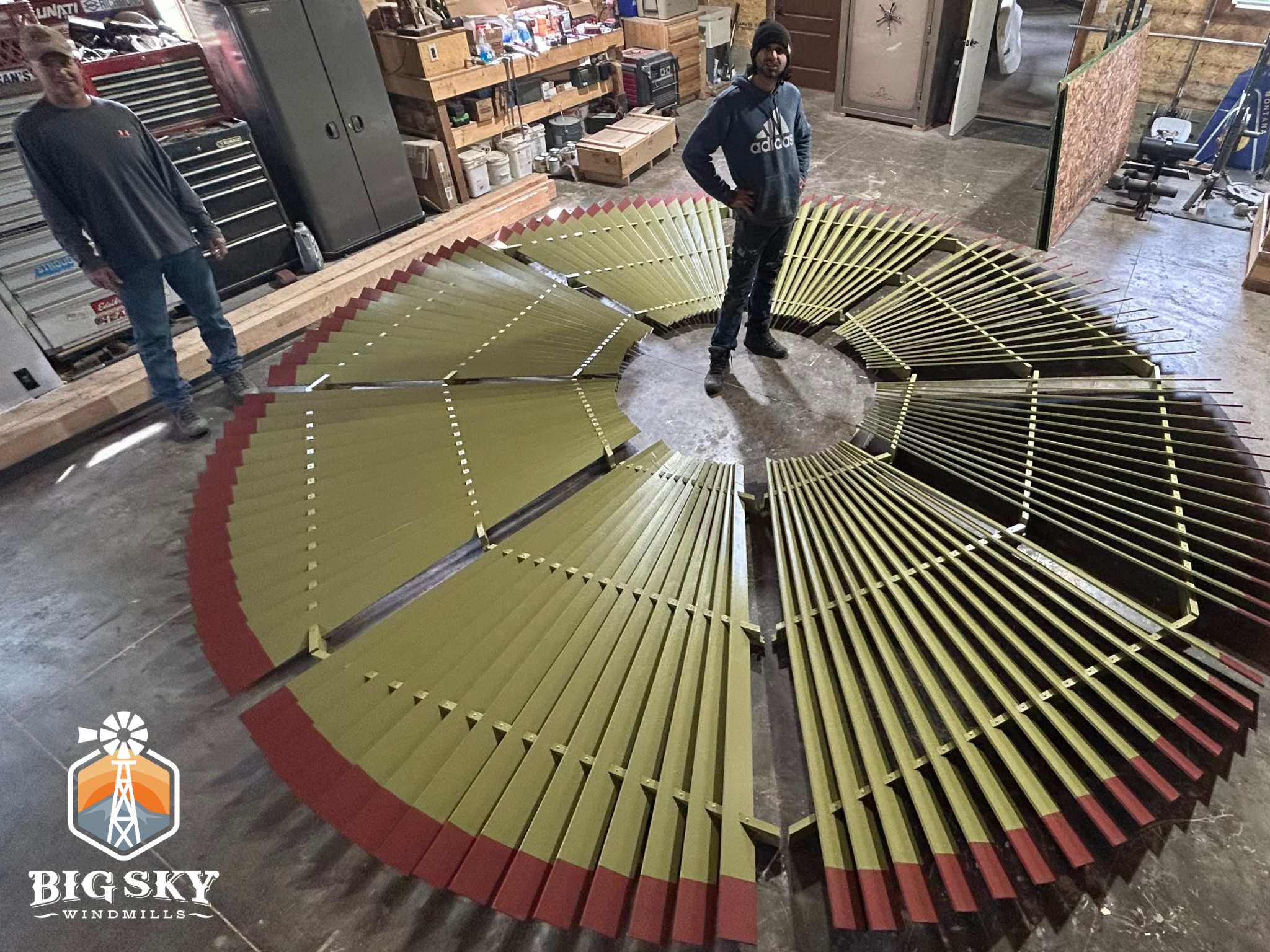

First Patented in 1867, the Eclipse Windmill was among the most dominant and successful designs in the period just after the Civil War into the late 1800s. Eclipse Windmills and their unique wooden sails were common on farms and ranches all over the Midwest. These windmills ranged from 8 feet to 14 feet in diameter with advertising for the larger sizes stating capability of drawing from deep wells.
In addition to ranch use, massive Railroad Eclipse windmills were known for steam locomotive water supply on the Southern Pacific and Texas & Pacific Railroads in the American Southwest. At 22 ½ feet in diameter the Railroad Eclipse were the largest windmills ever built by the Eclipse Windmill Company. The Canon Ranch Railroad Eclipse Windmill was one of only four known to exist and was the last one still resting above its original well. Jim Collums and his nephew, Woldhagen James, restored the historic windmill in 2001. In 2019, the windmill was moved to the National Ranching Heritage Center for additional restoration and permanent installation in the center’s 27-acre historical park in Lubbock, Texas.
How We Got Our Start In Building Eclipse Reproductions
Our passion for these historical wooden relics was sparked when we undertook the challenge of reproducing the Eclipse-style windmills for the filmmaking industry. The era of metal windmills didn’t begin until 35 years after the post-Civil War Old West. To create a set that was historically accurate for that time period, a wooden windmill was required. This first prototype was part of the movie set in northwest Arizona for Horizon: An American Saga. It sits on a wooden tower south of St George, Utah.
Our second iteration built was a replica of an 8-foot wooden Eclipse-style windmill for Dawn Manor, a historic lodge renovation in Wisconsin Dells. Using old black and white photo’s the client provided, we built a modern version that mounted on an 8-foot Aermotor gearbox.
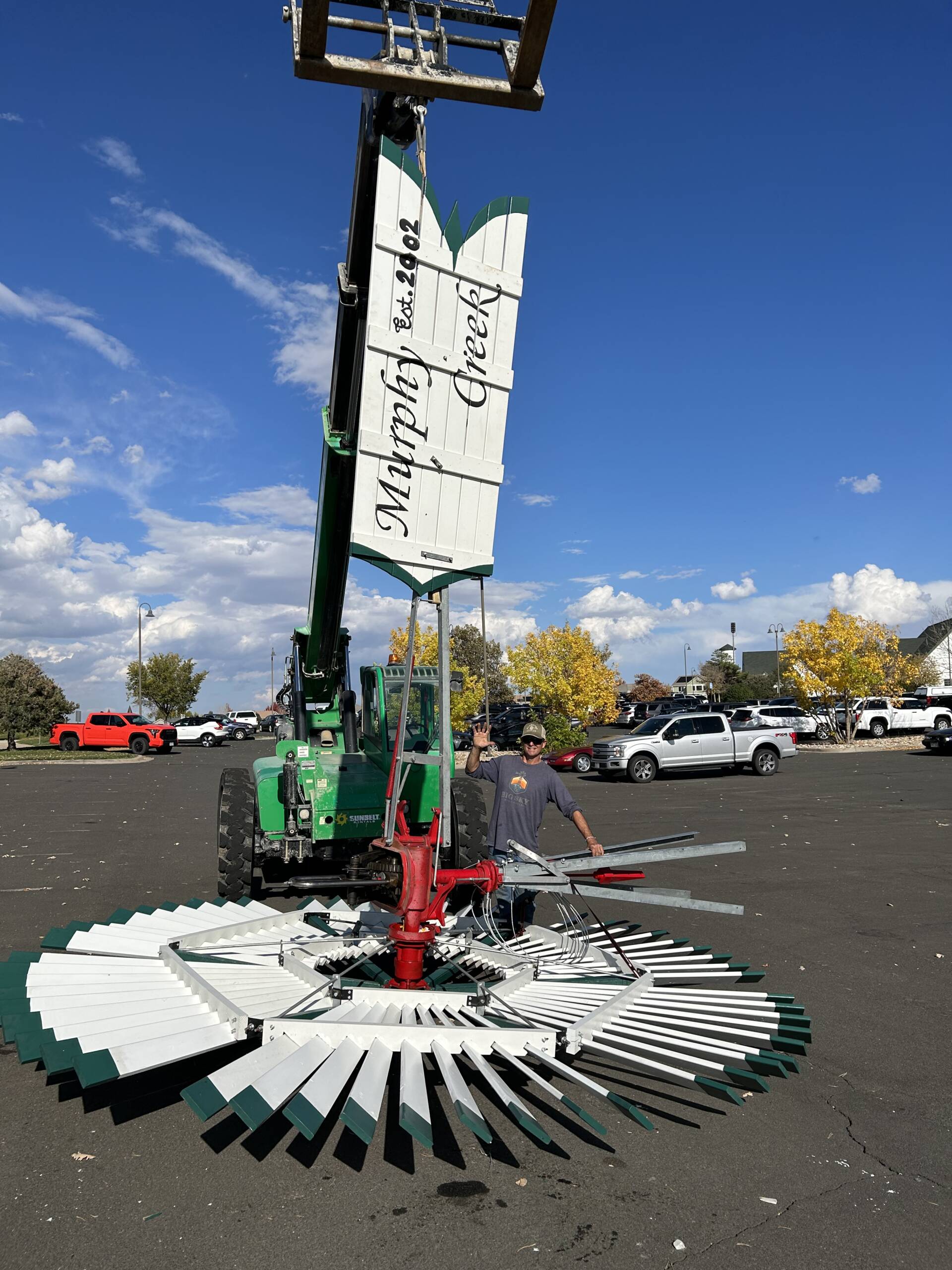
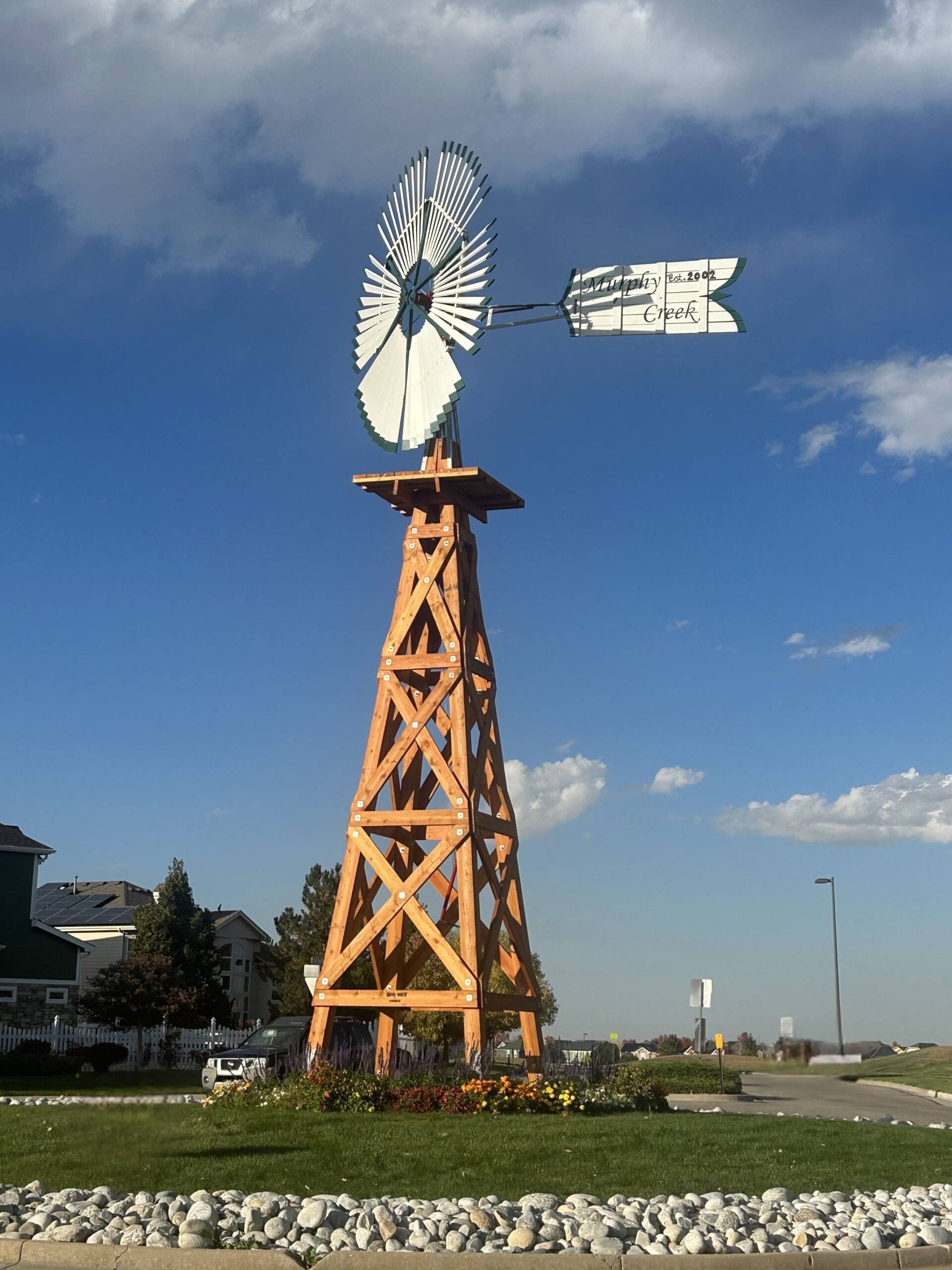
Our third wooden wheel windmill now stands at the Murphy Creek Golf Course in Aurora, Colorado. This windmill is featured on our homepage and is the largest we’ve built so far. Its 14-foot wheel is equivalent to the largest wooden Eclipses that were sold for farm and ranch use. See the brief appearance of this windmill in NBC Montana’s “Made in Montana” news story.
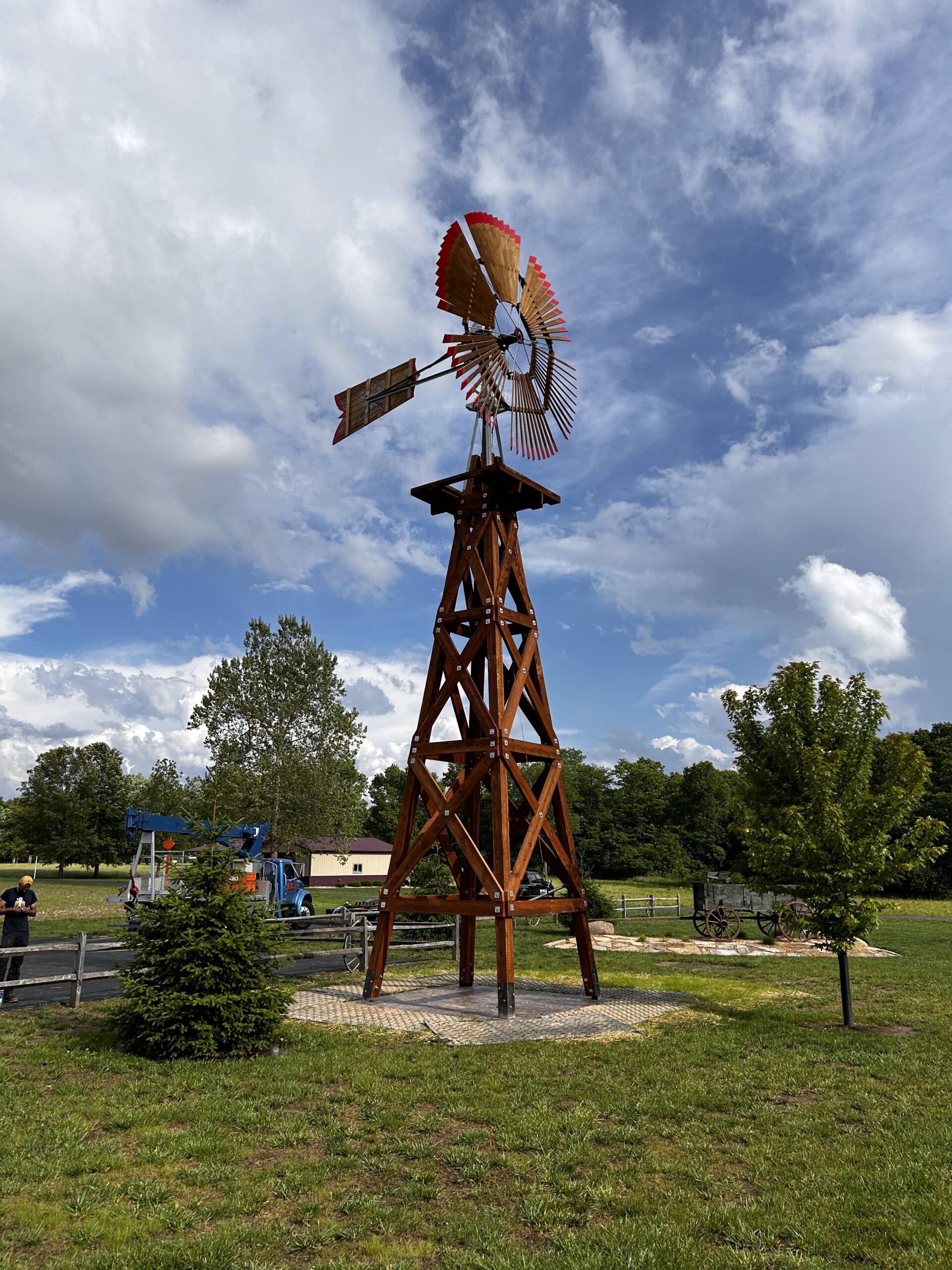
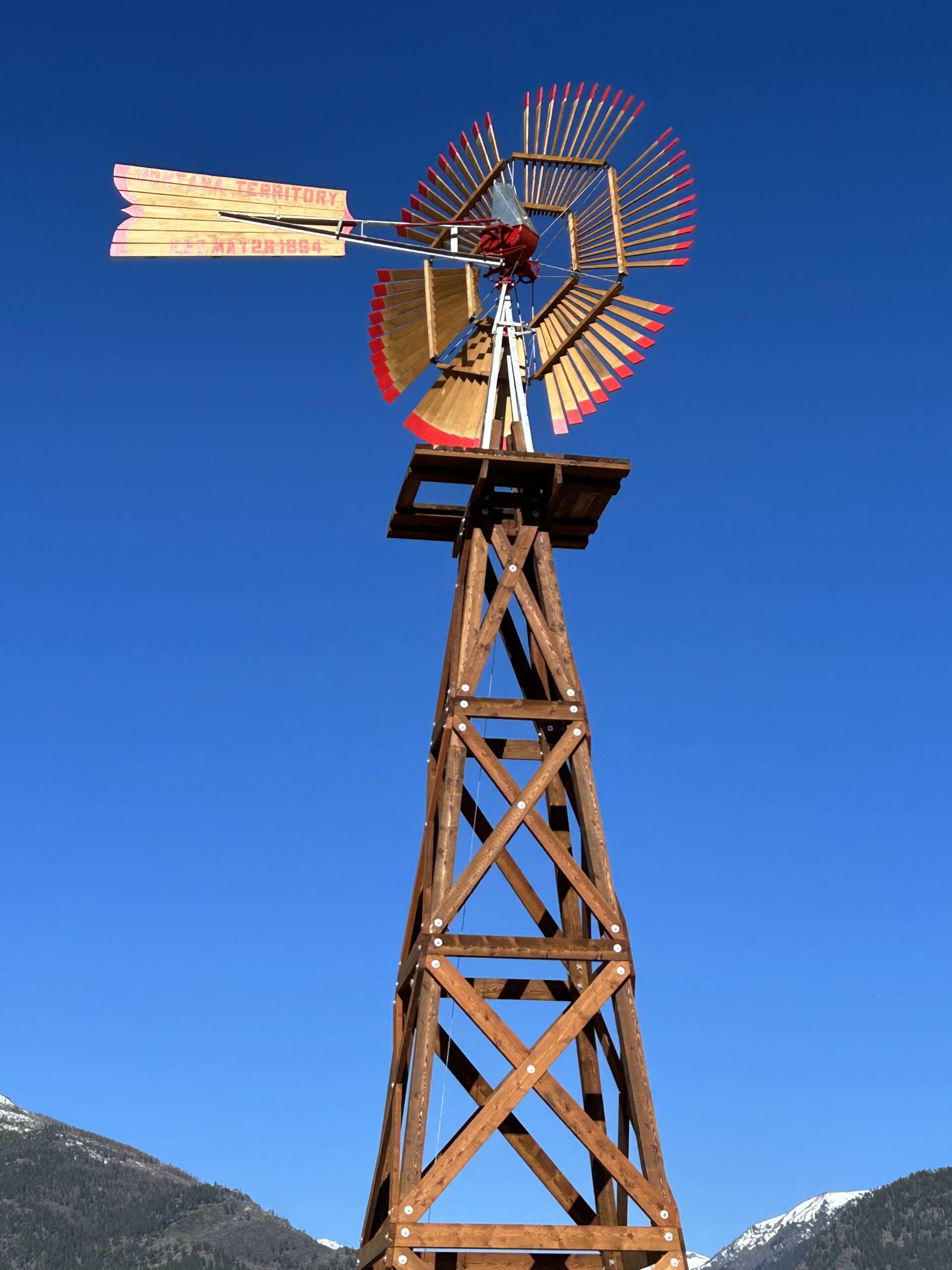
After the success of the third design, we built two more 14-foot wheels on our Douglas Fir towers. One resides at the Trails End Saloon in Clinton, Indiana. This project was done in conjunction with Hoosier Windmills. The other is available and sits on a 45-foot tower at our sales yard in Victor, Montana.
Another reproduction project we completed was an 18-foot diameter Eclipse-style wheel for the Arapahoe County Fairgrounds Event Center.
How Our Reproductions Are Built To Last
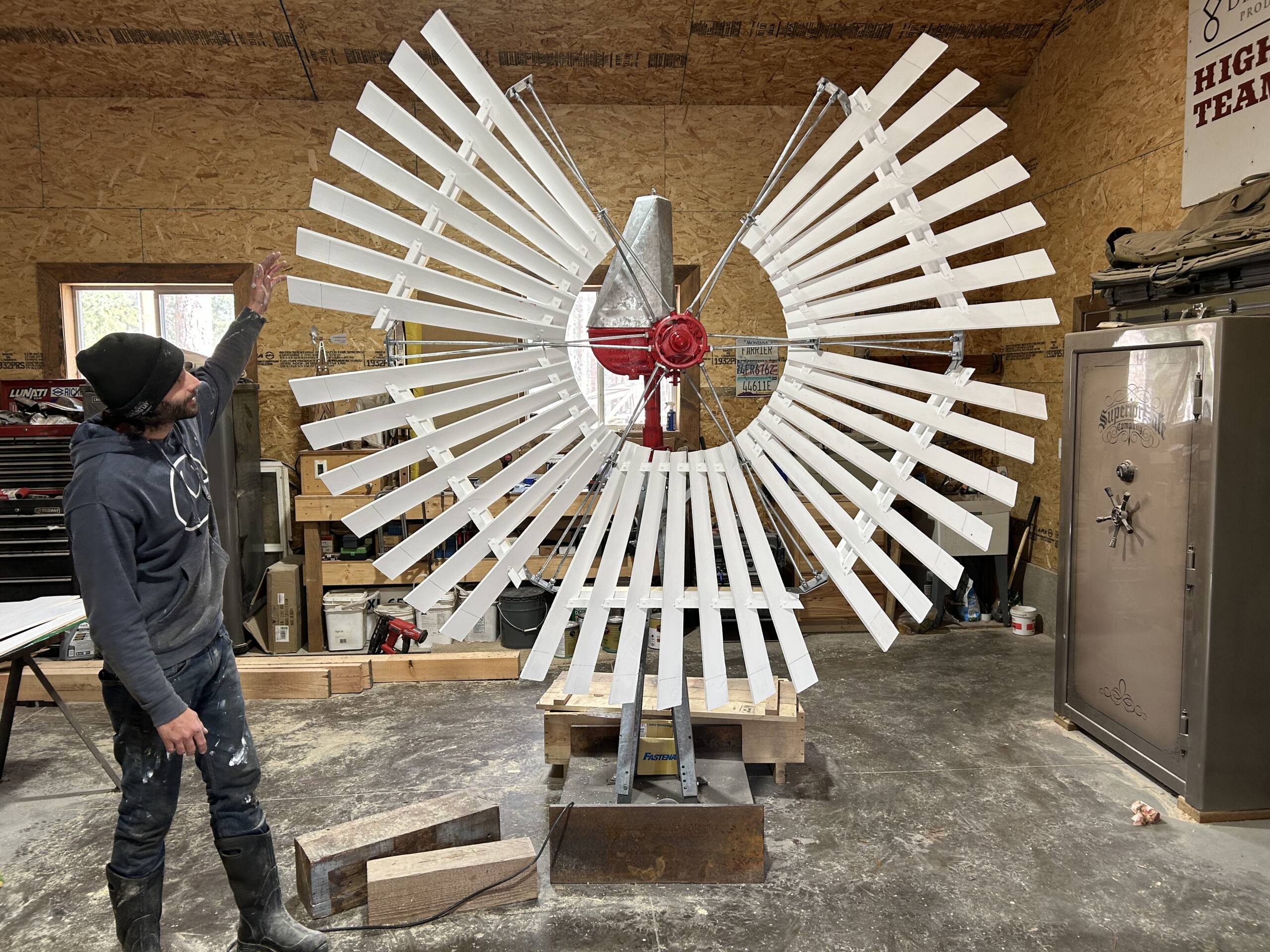
Original Eclipse designs primarily used cypress or poplar for the wood sails, and they ranged from 3/8 to a ½-inch thick. The gear mechanisms didn’t have the strength and rigidity to operate a heavy mill, so the wheels had to be light weight. With the increased strength of the modern Aermotor gear box, we can build heavier wheels and tails from thicker wood to double the service life of the wood components. Opposed to the original Eclipse windmills that needed to be greased every few weeks, the Aermotor has an oil bath gear box with oiling ring that adds the benefit of low maintenance because its maintenance interval is measured in years instead of weeks.
Our wheel is built with ¾-inch thick sails of Alaskan Yellow Cedar. While this wood species is in the cypress family, it has a straight grain, much better strength numbers and is very resistant to rot from rain and moisture.
The old rule of thumb for wooden wheel lifespan was about 10 to 12 years. By incorporating steel main spokes, thicker wooden sails, and mounting all of it to an Aermotor oil bath gearbox, we expect to see the service life of our wheels exceed 20 years.
